

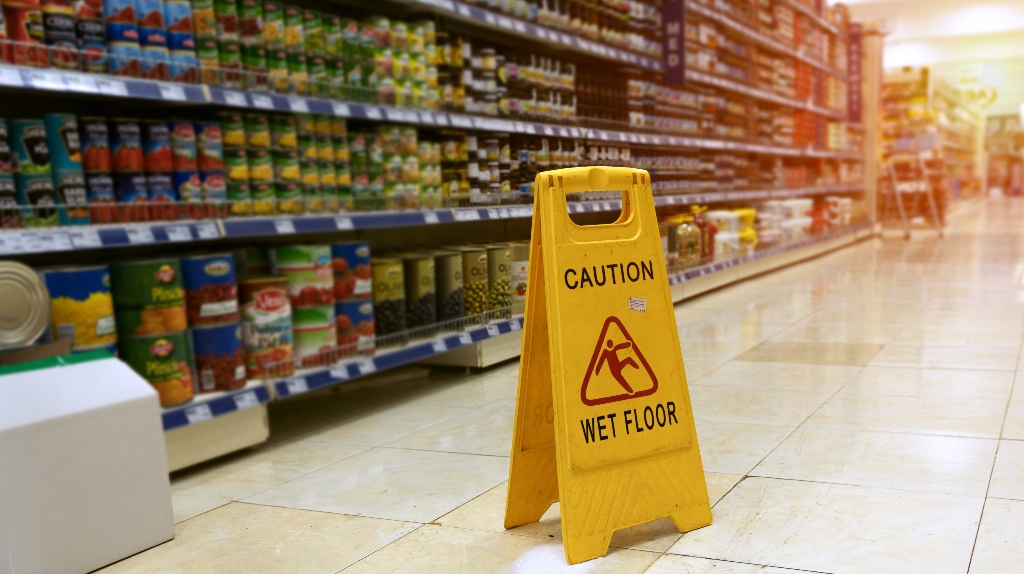
Slip-and-fall accidents can occur anywhere, from the polished aisles of a large grocery store to the cozy interior of a neighborhood bakery. However, under Mississippi’s premises liability laws, the legal obligations of these property owners and your ability to receive compensation can vary significantly depending on the type of business, the nature of the hazard, and how long it has existed.
At Gregory D. Keenum, PA, we have nearly 49 years of experience serving the community since 1979. We understand these complexities and are dedicated to assisting injured clients in navigating the intricacies of personal injury claims.
Understanding Premises Liability in Mississippi
In Mississippi, property owners have a legal obligation to take care of individuals who enter their property. However, the level of this obligation varies depending on the legal status of the visitor (invitee, licensee, or trespasser) and the type of property involved. Most people who visit retail stores, such as grocery stores and small businesses, are considered “invitees,” meaning they are there for a purpose related to the owner’s business.
Under Mississippi Code § 11-7-15, property owners are required to exercise ordinary care in keeping their premises reasonably safe for people who are invited to enter. This includes regularly inspecting the premises for hazards and taking steps to either fix them or provide adequate warnings about them.
Grocery Stores: Heightened Duty Due to High Traffic and Operational Risks
Large grocery stores face unique challenges. Refrigerated areas may leak, produce sections often have wet floors, and spills from dropped items are common. Due to the volume of customers and the nature of their business, courts often expect grocery stores to maintain a higher standard of safety and care.
For example, in the case of Jerry Lee’s Grocery Inc. v. Thompson, the Supreme Court of Mississippi emphasized that businesses with self-service models, such as supermarkets, must be prepared for the possibility of merchandise falling or liquids spilling, creating foreseeable hazards. The court ruled that these businesses must implement reasonable inspection procedures and respond promptly to any known or potential hazards.
If you slip on a puddle near the deli counter, which the staff knew about but failed to clean or mark, the store may be held liable. Timing is important: if surveillance footage shows that the spill existed for 30 minutes without any action, this strengthens your case. Conversely, if the slip occurred seconds before the fall, it may be harder to prove liability.
Small Businesses: Different Expectations, Same Legal Framework
Small businesses, such as local boutiques, cafes, and hardware stores, are also subject to Mississippi’s premises liability laws. However, courts may take into account factors such as staffing limitations, lower customer volumes, and less complex operations when determining whether the owner acted responsibly.
That said, “small” doesn’t mean exempt. A coffee shop owner who mops the floor during business hours without placing a “Wet Floor” sign could still be found negligent if a customer slips and is injured. The key question remains: did the business know, or should they have known, about the dangerous condition?
In Oakes v. Harvey, the Mississippi Court of Appeals held that even small businesses must take reasonable measures to address hazards they create or discover. The size of the business determines what is “reasonable” – a one-person operation is not expected to conduct a thorough inspection every minute, but this does not eliminate responsibility entirely.
Proving Your Case: Notice Is Critical
Whether your fall occurred in a Walmart or a family-owned flower shop, it is essential to provide notice. Mississippi law requires plaintiffs to show one of two things:
- Actual notice: The owner was aware of the hazard.
- Constructive notice: The hazard was present for so long that a reasonable person would have noticed it.
Evidence such as security footage, employee logs, witness statements, or even weather reports (for rainwater that has been tracked) can support your case. Without proof of notification, even a serious injury may not result in compensation.
Why Local Legal Experience Matters
At Gregory D. Keenum PA, we have helped countless clients in Mississippi to pursue fair compensation after slip and fall accidents. Our founder, Gregory D. Keenum, brings decades of experience in the courtroom and a deep understanding of how local judges and juries interpret premises liability laws. We understand that each case is unique and that small details can have a significant impact on the outcome.
If you have been injured in a fall in a grocery store, convenience store or any other commercial property, do not assume that the business is not liable simply because it is small or that a large chain will automatically pay. The laws in Mississippi consider the reasonableness of the situation rather than the size of the business.
Contact us today for a consultation. We are committed to providing you with personalized service and results that will help protect your rights and move you forward.